Legal News Update: Monarch butterfly has been added to endangered species list, to conserve them scientists in California have given them solar-powered radio backpacks
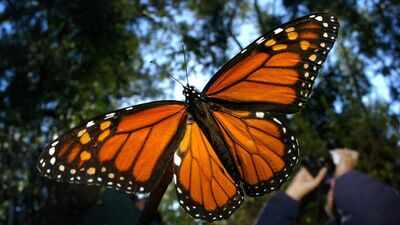
Scientists are using tiny solar-powered devices to track the movements of endangered monarch butterflies. Researchers on the California coast are using these devices to understand how the butterflies use their overwintering habitats and nearby nectar sources. The migratory monarch butterfly (Danaus plexippus plexippus) was listed as Endangered on the IUCN Red List in 2022, while the US Fish & Wildlife Service has separately proposed listing monarchs as threatened under the Endangered Species Act.The tracking project uses small radio telemetry devices attached to the butterflies’ backs, effectively giving them what can be described as solar-powered “radio backpacks.” According to the US Fish & Wildlife Service (USFWS), the technology is being tested to collect movement data and understand how monarchs use overwintering groves and nearby nectar flowers in California.
Solar-powered radio tags track monarch butterfly movement
The USFWS Coastal Program in Central California partnered with Althouse & Meade, a biological and environmental consulting firm, to test the tracking technology. In November 2025, staff and partners tagged monarchs at three overwintering sites across San Luis Obispo and Santa Barbara Counties.The devices use solar-powered radio telemetry to transmit geospatial information through radio waves. Each tag is small enough to be attached to a monarch’s back, allowing researchers to follow its movements without relying solely on visual observations. Weather information is also being collected at the sites so researchers can compare environmental conditions with the butterflies’ movements.“The goal of this project is to increase our understanding of monarch butterfly use of overwintering groves in coastal California. The results will be used to better inform restoration and management of monarch overwintering groves,” the US Fish & Wildlife Service said in a statement
How scientists attach radio backpacks to monarch butterflies
Catching the butterflies requires taking advantage of their dependence on external heat. Monarchs are ectotherms, meaning they rely on the environment to regulate their body temperature. They need warmth from the sun to reach the body temperature required for flight.For that reason, collection and tagging began early in the morning, when temperatures were below 55 degrees Fahrenheit, and the butterflies were less able to fly. After being collected, the monarchs were kept in a cooler at or below 55 degrees Fahrenheit.Researchers identified each butterfly as male or female and recorded its weight and measurements before deciding whether it was large enough to carry a telemetry tag. The small transmitters were then attached to the butterflies’ backs using eyelash glue, according to the USFWS.
Monarch butterfly conservation gets help from citizen scientists
The California tracking project also allows members of the public to contribute observations. The USFWS said people can use the Project Monarch app to access a map showing tagged monarchs and enter their own data.The information collected through the project is intended to help researchers understand how monarchs use coastal California’s overwintering habitat and nearby nectar sources. The findings could then inform restoration and management of overwintering groves.The IUCN added the migratory monarch butterfly to its Endangered category in 2022 after assessing the population’s decline and threats. The classification applies specifically to the migratory monarch population, rather than every monarch butterfly population worldwide.
Stay updated with the latest legal news, judgments, internships, and opportunities.
monarch butterfly endangered species list,conservation of monarch butterflies,solar-powered radio backpacks,tracking monarch butterfly movements,US Fish and Wildlife Service,California monarch butterfly project,IUCN Red List,monarch butterfly overwintering habitats,citizen science butterfly tracking,US Fish & Wildlife Service