Legal News Update: In 1953, a California family bought a 58-acre berry farm for $3,500; decades later they reportedly refused a $90 million offer from Disney and kept farming beside Disneyland
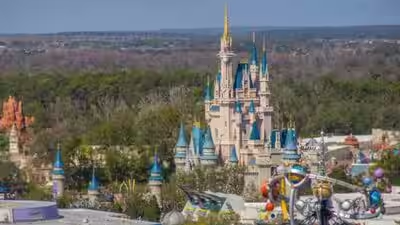
For decades, a small family farm stood next to Disneyland in Anaheim, California. While the theme park expanded around it, the Fujishige family continued to grow strawberries, vegetables and herbs on their land.The farm had become an unusual sight in an area increasingly shaped by Disney and tourism. According to SF Gate,By the 1990s, the family’s produce stand was still selling fresh strawberries and vegetables to locals and visitors, even as the value of the land rose sharply.The Fujishige family had repeatedly rejected offers to sell the property. Disney executives wanted the land as the company planned further development around Disneyland. But Hiroshi Fujishige remained firm about keeping the farm. “This land means quite a bit to me. My brother died for it.” Fujishige told the Los Angeles Times in 1991.Hiroshi and his brother Masao were born in Los Angeles in the 1920s to Japanese parents. According to PBS SoCal, their family faced restrictions under California’s Alien Land Laws, which prevented Japanese immigrants from owning land.When the US military forced Japanese Americans to leave the West Coast in 1942, the Fujishige family moved to Utah. Hiroshi was later drafted into the US Army. Before he was sent to Europe, he became seriously ill. By the time Fujishige recovered, the war had ended. “He saved my life,” Fujishige later told the Post.
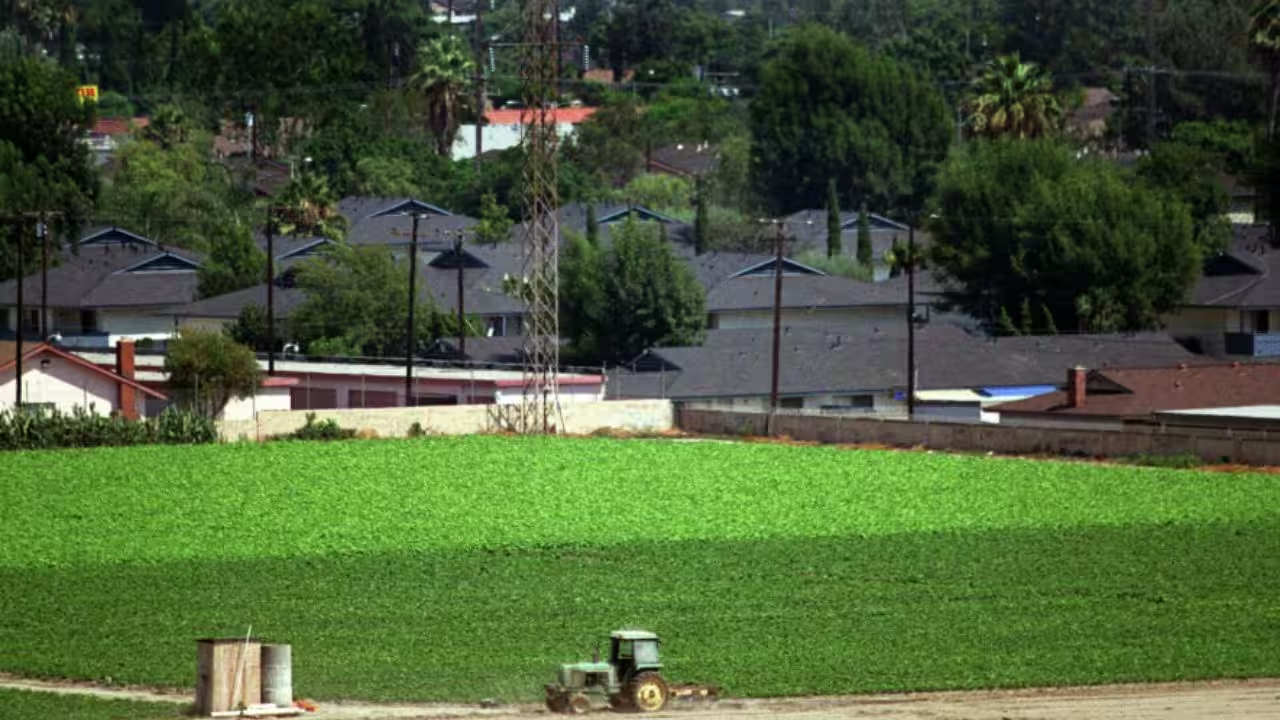
Fujishige family’s more than 50-acre farm on Harbor Boulevard in Anaheim in 1998.
Living next to Disneyland
After the war, the family returned to California. In 1953, Hiroshi and Masao bought a 58-acre berry farm in Anaheim for $3,500. They began growing strawberries, vegetables and herbs on the property.At the time, Walt Disney was developing his plans for a theme park in Anaheim. The Fujishiges watched the area around their farm change as Disneyland took shape nearby. Disneyland opened in July 1955.The contrast became more striking as Anaheim developed. High-rise hotels and other businesses appeared around the farm, while the Fujishiges continued farming. Their roadside stand sold produce from the property, including strawberries and corn.As Disneyland grew, so did interest in the Fujishige land. The property was in an increasingly valuable location, and developers began approaching the family with offers.Fujishige did not appear impressed by the attention. In 1991, he told the Los Angeles Times that one man had offered $2 million per acre. He rejected the offer and said, “I didn’t even get his name.”A few years later, Disney chairman Michael Eisner invited Fujishige to meet at a Disneyland restaurant and tried to persuade him to sell. Fujishige remained unconvinced.
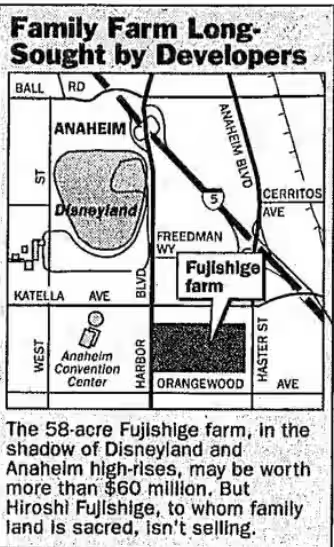
Picture: Los Angeles Times
City tried to seize land
In 1985, Anaheim announced that it would use eminent domain on behalf of a private business for the first time in the city’s history. A Hong Kong developer was planning a $200 million hotel and condominium project near the Anaheim Convention Center. The project was expected to increase traffic, and two roads were proposed through the Fujishige farm.The family refused to sell again. The city then moved to seize the land so the project could go ahead. The following year, after a day working in the fields, Masao Fujishige died by suicide. Family members said he had been deeply distressed over the fight with the city and that his health had also suffered after a stroke three years earlier.Hiroshi later appeared before the Anaheim City Council and told members they should not blame themselves.“I have no bad feelings for any of you,” he said. “He was a sick man. The only trouble was I didn’t realize how sick he was.”The developer eventually withdrew from the project, but interest in the land continued. By the 1990s, the Fujishige property was described as one of the most valuable undeveloped plots in the area.Despite that, the family continued farming. A source close to the family told the Los Angeles Times in 1991, “Some say he’s crazy, because he’s sitting on property worth between $60 million and $70 million, watching his strawberries grow.”
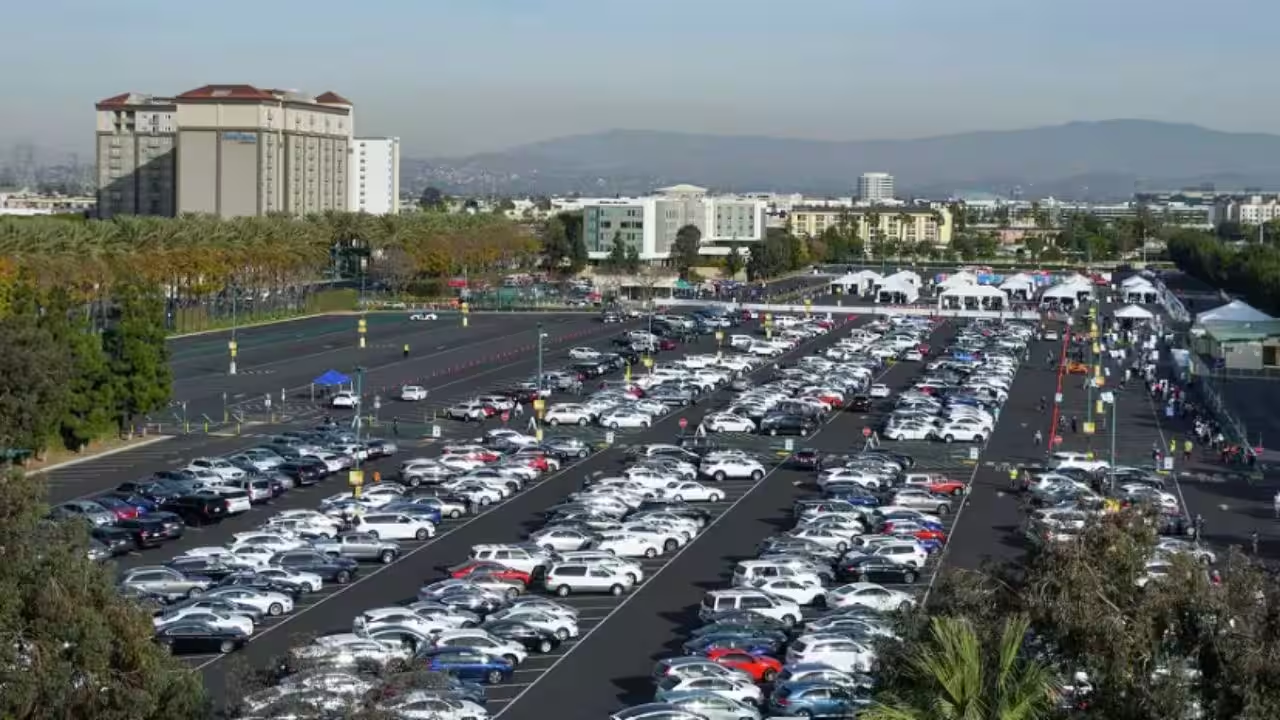
The former farmland became the site of the Toy Story parking lot (Getty images)
Disney finally gets land
The pressure increased in the 1990s as Disney considered expanding its Anaheim resort. The company eventually announced plans that would lead to the development of Disney’s California Adventure, creating a need for more land around Disneyland.The Fujishige farm remained in the way of that expansion. The family’s produce stand continued operating from 7 am to 5 pm, even though the money made from farming was small compared with what the land could bring through a sale.Then, in February 1998, Hiroshi Fujishige, who was 75, suffered a serious fall in his bathroom. Six months later, Disney announced that the Fujishige family had agreed to sell the property. The agreement allowed the family to keep 3.5 acres for farming and their produce stand for a period. The family did not publicly explain what had changed their minds. Fujishige’s declining health was seen as one possible factor.The final sale price was not disclosed. SFGATE reported that experts estimated it at between $65 million and $78 million. PBS SoCal, meanwhile, reported that Disney had offered the Fujishiges $90 million for the land. A month after the sale was announced, Hiroshi Fujishige died.The former farmland became the site of the Toy Story parking lot, where Disneyland visitors park before taking a shuttle to the resort.
Stay updated with the latest legal news, judgments, internships, and opportunities.
Fujishige family,Hiroshi Fujishige,Disneyland expansion,Japanese American history,Land ownership restrictions