![Out of sight<br />” msid=”133394124″ imgsize=”60627″ resizemode=”4″ width=”” title=”According to Klein, an extreme winter might have forced the stressed population to the brink.” placeholdersrc=”https://static.toiimg.com/photo/83033472.cms” offsetvertical=”0″ placeholdermsid=”47529300″ type=”thumb” class=”” src=”https://static.toiimg.com/photo/imgsize-60627,msid-133394124/out-of-sightbrbr.jpg” data-api-prerender=”true”/></p>
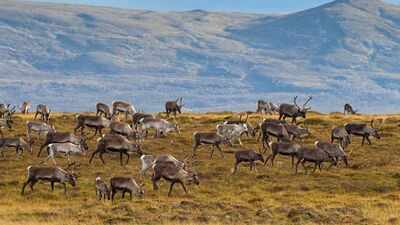
<p>According to Klein, an extreme winter might have forced the stressed population to the brink.</p>
</div>
</div>
<p><span class=]()
When Klein returned to the island in the summer of 1966, three years since his last visit, the herd of 6,000 had shrunk to a shocking 42. This number included only one male that had abnormal antlers and was probably unable to reproduce. There were no fawns.
Moreover, reindeer skeletons littered the entire island. The herd had busted. During the next decade or so, all the reindeer of St. Matthew Island died off. According to the US Geological Survey, the last female died in 1981.
According to Klein, an extreme winter might have forced the stressed population to the brink. Soon, Martha Shulski and John Walsh were helping Klein reconstruct the events of the extraordinarily harsh winter of 1963 to 1964. Shulski, a former Alaska climatologist who is now director of the High Plains Regional Climate Centre at the University of Nebraska, and Walsh, chief scientist at UAF’s International Arctic Research Centre, dug up weather records from the nearest official weather station to St. Matthew.
That station is located 200 miles south on St. Paul Island. The scientists pored over a reanalysis of area weather variables provided by the National Centres for Environmental Prediction. They found, and described in an article in the November/December 2009 issue of the magazine Weatherwise, that the winter of 1963-1964 was one of the most extreme on record in the northern Bering Sea.
During February and March 1964, the reindeer experienced almost constant windstorms, the nastiest of which featured an atmospheric pressure typical of a Category 3 hurricane. Blasting northerly winds combined with below-zero air temperatures to create wind chills below minus 40 degrees Fahrenheit for a week straight in early February, and a low wind chill reading of minus 71.5 degrees Fahrenheit on March 13, 1964, when the air temperature was minus 34 degrees and the wind blew 30 mph. Perhaps even more damaging to the reindeer were record amounts of snow. St. Paul, Alaska, received 140 inches of snow during the 1963-1964 season.
“The higher snow depths and hard crusts on the snowpack … meant the reindeer were virtually prevented from obtaining any of their already depleted food resources,” the scientists wrote in Weatherwise. They concluded that only 42 reindeer survived the storm. When Klein examined the skeletal remains during his 1966 visit, he saw that the bones of fetal reindeer nestled within the bones of their mothers revealed that “most of the pregnant females had died about the time of the storms or shortly thereafter.“
The reconstruction of extreme weather events has given Klein some closure on a mystery he had pondered since he visited the island in the late 1960s, and all three scientists now appreciate the vulnerability of some groups of animals.
“In isolated or fractured environments, wildlife populations can be extinguished by severe weather events,” John Walsh said in a presentation about the St. Matthew reindeer he gave at the 2009 Fall Meeting of the American Geophysical Union in San Francisco.
Now, the members of the island are the Arctic fox, singing voles and nesting seabirds, including the endemic McKay’s bunting.
St. Matthew Island reindeer,reindeer extinction Alaska,wildlife boom and bust,Nunivak Island,Alaska Coast Guard reindeer,Bering Sea wildlife,Dave Klein biologist,University of Alaska Fairbanks,1944 reindeer introduction,impact of extreme weather on wildlife