
Legal News Update: Five minutes, 28 covers, 300 tyres: How Galle’s 130-member groundstaff beat the rain | Cricket News

TimesofIndia.com in Galle: The match was over. The formalities were completed, and both teams had already left the stadium. The broadcast crew was busy packing up for the next game, but the work was only getting started for Manjula and the 130 groundstaff at the Galle International Cricket Stadium. It rained immediately after the two teams completed their handshakes, but unlike the preceding week, there was no urgency to cover the square or the ground. Overseeing operations, Manjula stood on top of the advertising board and kept a close eye as the covers were neatly folded and parked after a week of intense activity.Since India and Sri Lanka arrived in the coastal city for the series opener, rain has appeared frequently enough to keep Manjula and his team on their toes. Not all of them are employees of Sri Lanka Cricket (SLC). Only 16 are permanent staff in Galle, while 10 came from Hambantota to help with the international fixture. The remaining staff were hired as daily workers.“We have 16 permanent employees and 10 come from Hambantota whenever an international match comes to Galle. For the rest, we hire daily workers for the duration of the match and practice sessions, and they are paid between 2,500 LKR and 4,000 LKR per day for the work,” says Manjula.
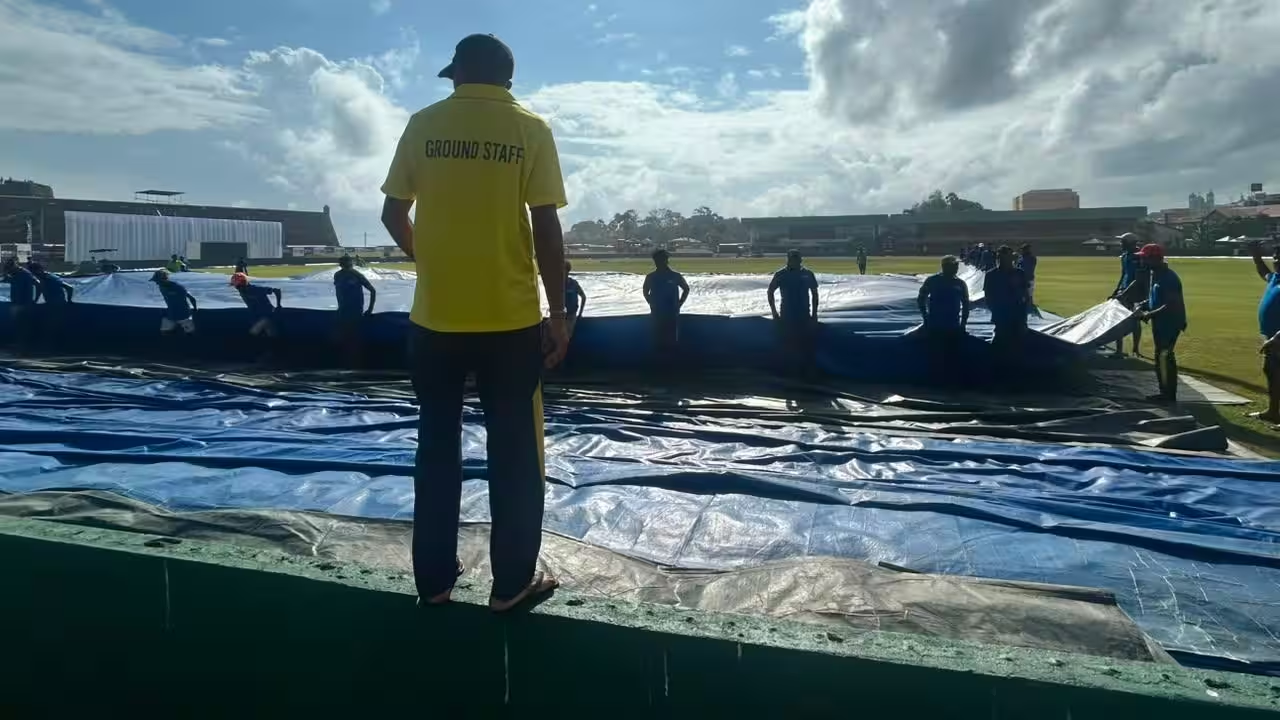
Manjula watching the proceedings at the Galle International Stadium. (Photo Courtesy: Sahil Malhotra)
From anticipation to execution, the groundstaff stuck to their methods and ensured there was no chaos, even during a heavy downpour. The average time they take to cover the entire ground is less than five minutes, and they work quickly depending on the situation. They look for cues, observe the cloud behaviour and are always staring towards the Indian Ocean near the Galle Fort.“We keep our eyes there,” he says, pointing towards the ocean near the fort. “When clouds start building up, we know it’s coming. Then we are ready and wait for the official signal to start covering the pitch, square, run-up and then the entire ground. That’s the order we follow.”“The reaction time is very important,” he adds.
We keep our eyes on the ocean. When clouds start building up, we know it’s coming. Then we are ready and wait for the official signal to start covering the pitch, square, run-up and then the entire ground.
Manjula | Groundsmen at Galle International Stadium
When the groundstaff run from all directions, dragging the covers, the synchronised effort is a sight. The first batch, covering the pitch and square, times their runs so there is no overlapping, and speed cannot be compromised because the run-up and the remainder of the field must be covered next. These are anything but light covers, and a 100×100 piece can weigh over 650 kg. Add to this the challenges of wind and rain.“These are not light,” Manjula says with a laugh. “They are well over 650 kg each for a 100×100 piece, and there are about 28 pieces we have to cover the entire ground and ensure no damage is done to the outfield.”
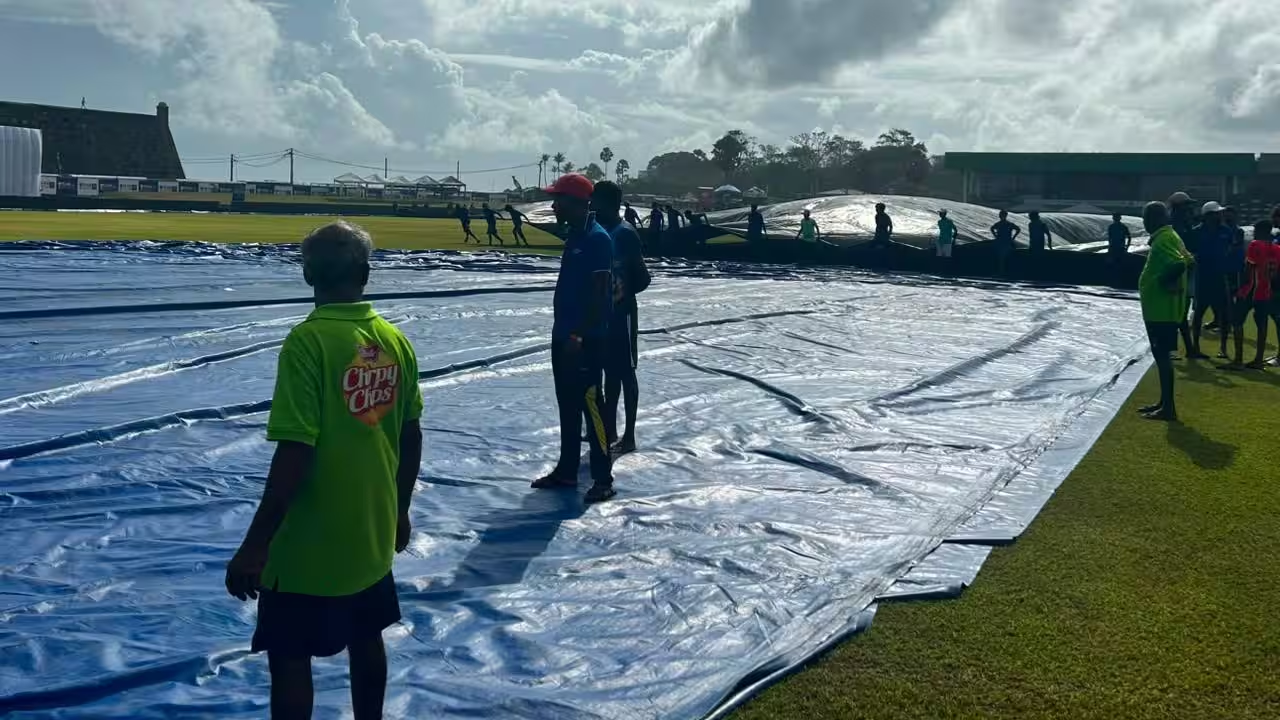
Groundsmen of Galle International Stadium in action. (Photo Courtesy: Sahil Malhotra)
While the covers are heavy enough to stay grounded on their own, heavy crosswinds present a challenge, and the next step is to carefully place heavy rubber tyres to keep the covers in place. More than 300 tyres are ready to be rolled onto the ground the moment rain arrives.“We keep these tyres over the covers because, as you have seen, it does get very windy. All this has to happen within a few minutes because the ground can’t be exposed for a long time. Sometimes showers are short but very strong. So reaction is key,” explains Manjula while pointing towards the tyres placed behind the LED boards.Removing the covers is also a work of art. They are not recklessly peeled off but carefully rolled out with enough waves to ensure water is deposited near the ropes and doesn’t spill onto the field.
![Galle [Sri Lanka], Aug 15 (ANI): Ground staff cover the ground as it rains durin...](https://legalactionforwomen.org/wp-content/uploads/2026/08/1787187066_375_Five-minutes-28-covers-300-tyres-How-Galles-130-member-groundstaff.jpg "Galle [Sri Lanka], Aug 15 (ANI): Ground staff cover the ground as it rains during day 1 of the 1st Test match between Sri Lanka and India, in Galle on Saturday. (ANI Photo)")
Galle [Sri Lanka], Aug 15 (ANI): Ground staff cover the ground as it rains during day 1 of the 1st Test match between Sri Lanka and India, in Galle on Saturday. (ANI Photo)
In addition to the groundstaff and their incredible performance, the Galle International Stadium has four functional Super Soppers that work their magic the moment the rain stops and the outfield needs preparation for resumption. In the last week, all the pieces came together seamlessly, and the field showed no sign of interruption.Most will be without work from Thursday, and some will travel back to Hambantota, but their relentless efforts deserve applause as they ensured crucial time wasn’t lost.
Stay updated with the latest legal news, judgments, internships, and opportunities.
Galle International Cricket Stadium,groundstaff,rain covers,Super Soppers,Sri Lanka Cricket,match preparation,tyres for covers,heavy rainfall,galle international stadium,India vs Sri Lanka