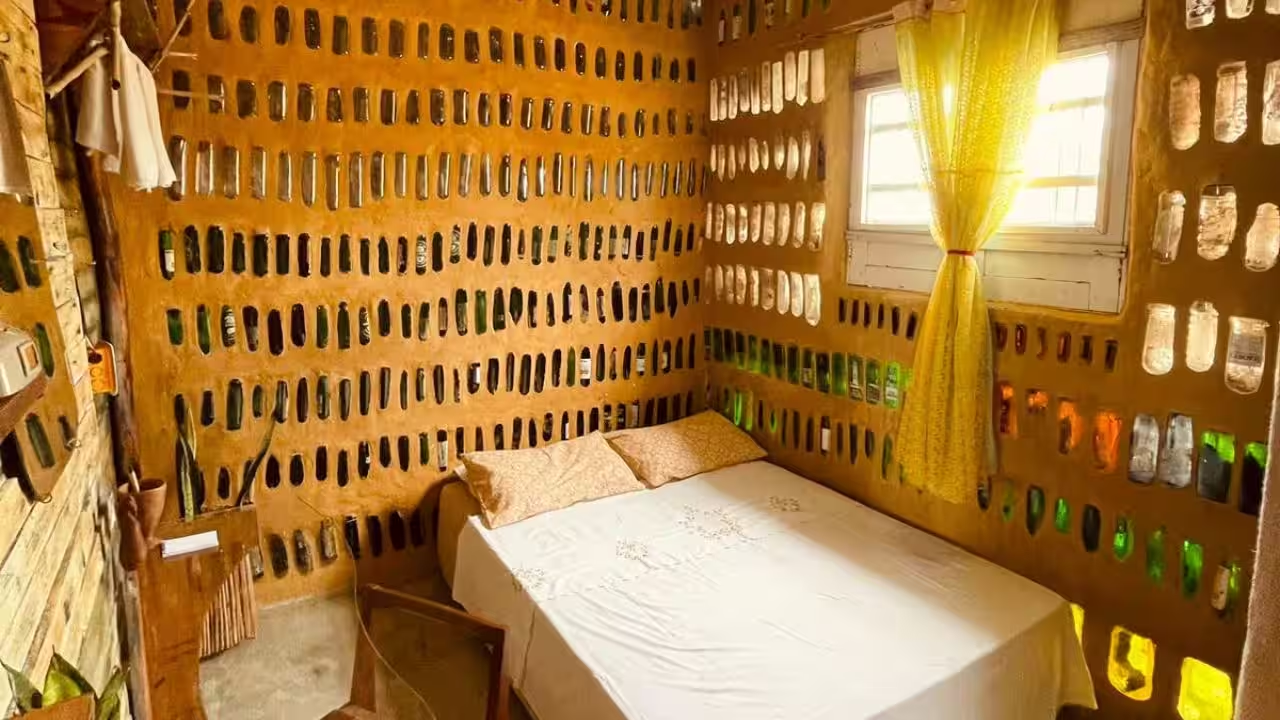
Legal News Update: In 2020, a Brazilian mother and daughter began collecting discarded bottles; years later, more than 8,000 glass bottles had become the walls of their seven-bedroom home that glows during sunrise
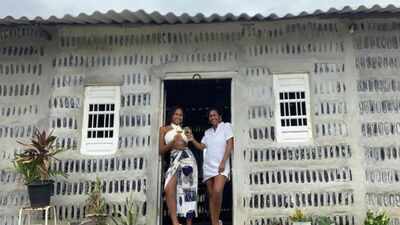
When people go on a trip, they make sure to carry back a suitcase full of memories. From photos to souvenirs, they invest in numerous things to ensure that they have something to remember the good times by. But one thing they always end up forgetting is to carry back the waste and deposit it correctly in the dustbins. From bottles to food wrappers, numerous pieces of evidence of human adventure collect on beaches and in forests for years, until they are all you can see on the land.On the Brazilian island of Itamaraca, one house is making a simple question that is hard to ignore. The waste tourists leave behind on a beach can either accumulate on the sand for years, or become useful in the wall or roof of a home. This is a step Edna Dantas and her daughter Maria Gabreilly Dantas took.The mother-daughter duo created Casa de Sal (The Salt House), a seven-room dwelling with the help of recycled wood, pallets, toothpaste tubes, and yes, more than 8,000 glass bottles. The home is located in Pernambuco, where beaches, biodiversity, rising tourism, and discarded waste paint a contrasting but realistic picture.
A beach problem, a home solution
Why glass matters
Edna grew up in a family that reused materials out of necessity and passed down their innate creativity onto her.
Glass sounds clean since it can be recycled again and again. But that does not help much when bottles are abandoned in mangroves, streets and beaches, without reaching the factories where they can be recycled. It is heavy, easy to discard, and often unattractive for informal collectors when the return is low.“These bottles are not going to disappear. Without policies to regulate their production or penalise abandonment, the least we can do is find ways to reuse them,” Edna told Black Enterprise. “If you throw a bottle away and it doesn’t break, it’ll still be there in a year.” If bottles are sold in tourist towns, someone has to plan what happens after they have served their purpose. For coastal communities, this is not an abstract environmental issue. It is the broken glass near the sand, the trash after a crowded weekend, and the extra cleanup that often falls on residents.Moreover, Brazil’s housing deficit was estimated at 5,773,983 homes in 2024, representing 7.4 per cent of occupied private households, according to the Ministry of Cities, citing data from Fundação João Pinheiro. That means Casa de Sal sits in the middle of two pressures at once. The country needs more decent housing, while local communities are also being asked to absorb the cost of waste. In a social media post, Edna shared an alarming statistic that claims it can take up to seven generations, 184 years, for Black women in Brazil to buy a house of their own. Edna cites “environmental racism” as the catalyst for this project, one she hopes can provide repair and healing for everyone in her community.Edna grew up in a family that reused materials out of necessity and passed down their innate creativity onto her. “My childhood was marked by creativity,” she told Globo. “I made my own bamboo toys, recycled whatever I could. We didn’t know it was environmental activism, it was just how we survived.”Indigenous to the Quilombola, an Afro-Brazilian people who are descendants of Africans who escaped slavery and started their own settlements in Brazil, the Dantas women see it as their responsibility to respect nature, with roots both in African and Indigenous cultures.Now, the Salt House is listed as a destination on Airbnb, and the duo hosts workshops to teach others in their community what they learned about this sustainable building method. They also now have an upcycled accessory brand, hand-sewing tote bags with other found materials.
Stay updated with the latest legal news, judgments, internships, and opportunities.
recycled home,sustainable architecture,eco-friendly construction,glass bottle house,Casa de Sal,Brazil housing crisis,upcycled materials,socio-environmental education,Airbnb,environmental conservation