
Legal News Update: Sabse bada rupaiya: Rs. banknotes beat $, € in circulation
MUMBAI: The US banknote, the most ubiquitous currency in the world used in everything from drug deals to legally accepted tender in multiple countries, falls short of the rupee when it comes to circulation numbers. RBI deputy governor Shirish Chandra Murmu said there are three times as many rupee banknotes in circulation as US dollar bills and nearly six times as many as euro notes. While the number of notes is determined by multiple factors, including GDP growth, inflation and interest rates, RBI is trying to contain the cost of currency by extending the life of banknotes using polymer.“Over the past few years, we have produced between 28 and 30 billion banknotes annually across six denominations, and disposed of roughly 21 billion pieces a year. As of today, 176 billion banknotes are in circulation in India. By comparison, roughly 56 billion US dollar bills and 30 billion euro banknotes were in circulation at the end of last year,” Murmu said.
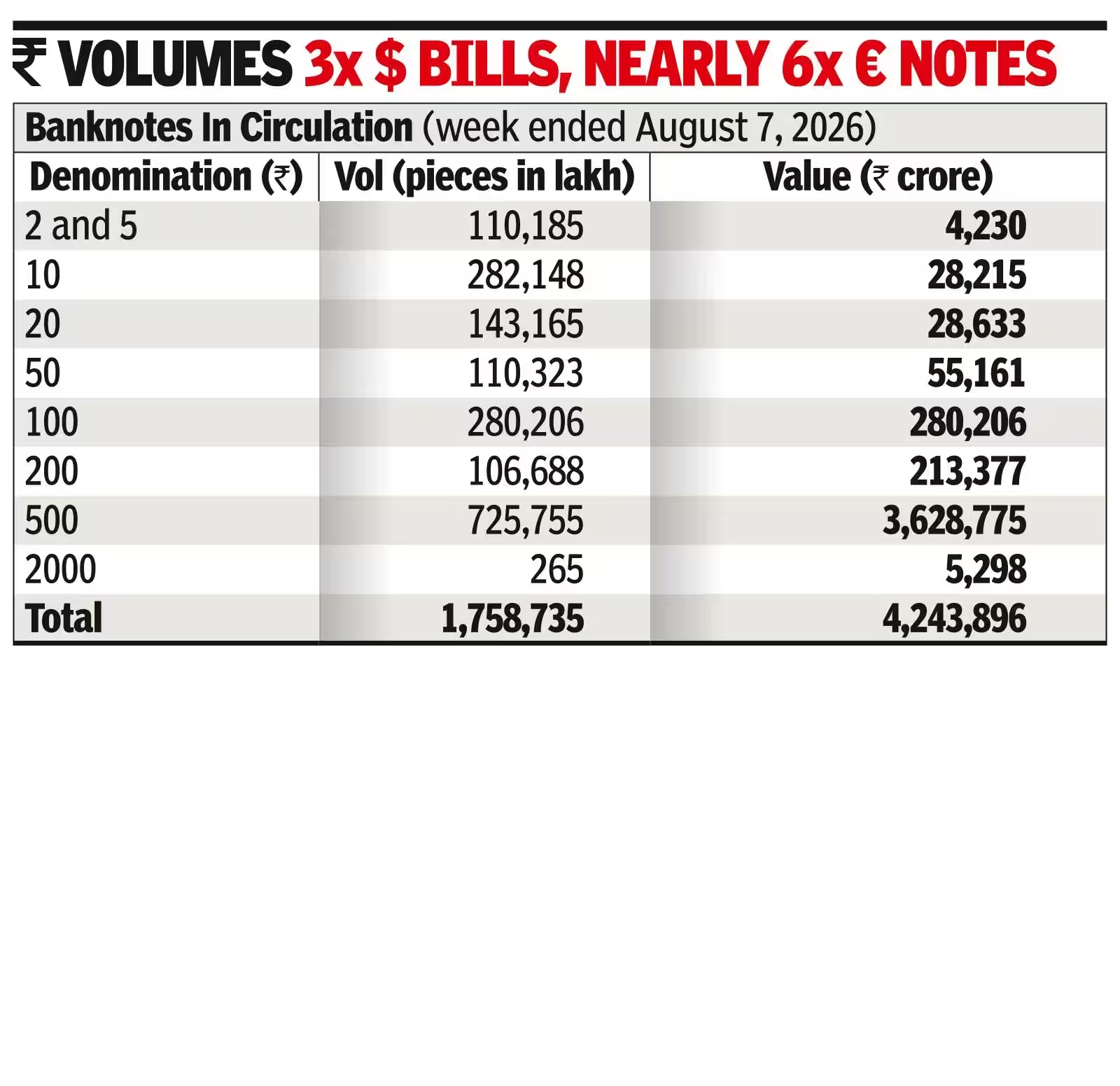
Rs.500 notes account for the largest share of banknotes in circulation, with 7.26 lakh lakh pieces worth ₹36.29 lakh crore as of August 7, 2026.
Murmu said the comparison partly reflected India’s denomination mix, which is weighted towards lower-value notes and therefore requires more pieces to carry out transactions of the same value. “Even so, the volume gives you a sense of the scale of the logistics we manage every day,” he said in a keynote address at a cash management conference organised by Bank Indonesia in Jakarta on Aug 13.RBI projects currency demand five years ahead, separating transactional demand from replacement demand. Transactional demand is driven by expected changes in currency in circulation, GDP growth, interest rates, food inflation and the adoption of digital payments. On the other hand, replacement demand reflects the need to withdraw old and unfit notes.Cash has continued to grow despite the expansion of digital payments. “Currency in circulation continues to grow at double-digit rates even as cash’s share of individual transactions declines, thanks to growing digital payment adoption,” Murmu said, describing this as a “cash paradox” that makes future demand harder to predict.India produces between 28 billion and 30 billion notes annually through banknote paper mills, four currency printing presses and ink production units owned and controlled by RBI and govt. RBI’s Clean Note Policy, introduced in 1999, requires it to make good-quality notes available to citizens and continuously replace notes deemed unfit for circulation.RBI distributes currency through its 19 regional offices and a network of currency chests operated by commercial and cooperative banks and govt treasuries. Currency also reaches the public through bank branches, more than 250,000 ATMs and cash dispensers, and millions of business correspondents in rural areas and smaller towns.
Stay updated with the latest legal news, judgments, internships, and opportunities.
RBI banknotes circulation,Rupee vs Dollar,currency demand India,digital payments growth,Indian currency statistics